
 Games
Games
Rescue Drone Simulator: Second Chance announced with a focus on realistic rescue operations in a future marked by conflict

sexta, 2 de outubro de 2026 19h 06min
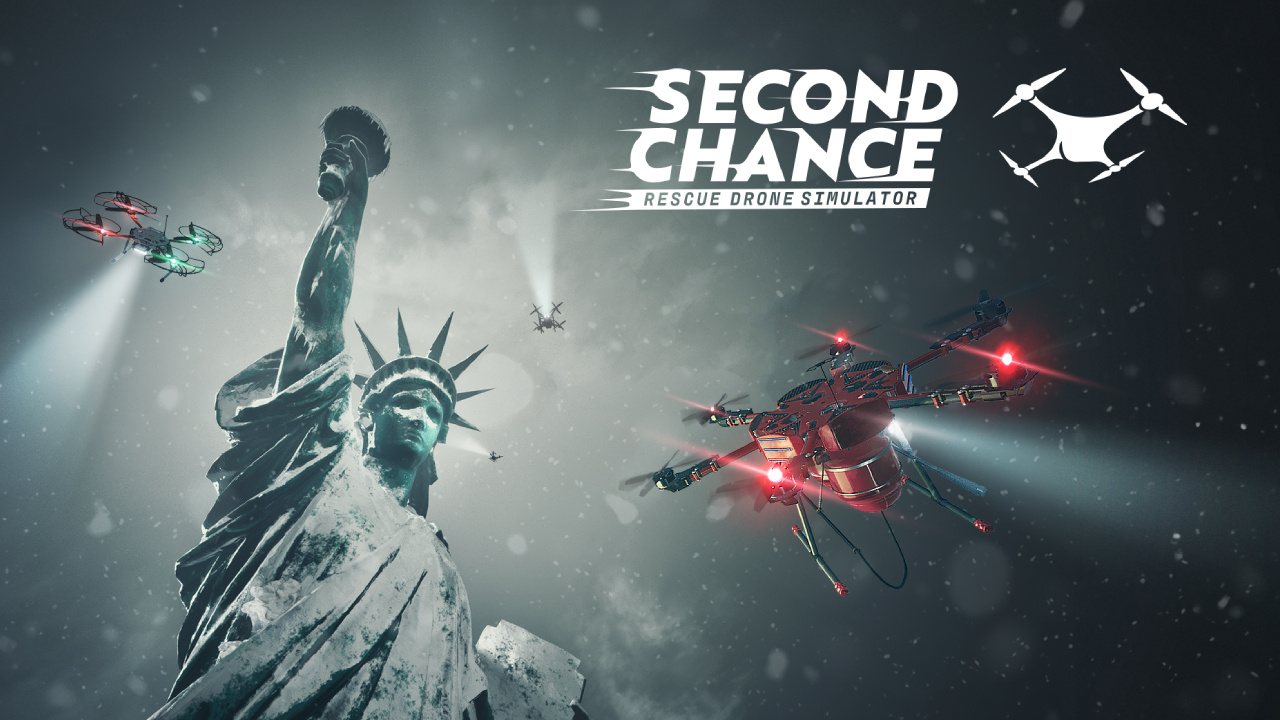
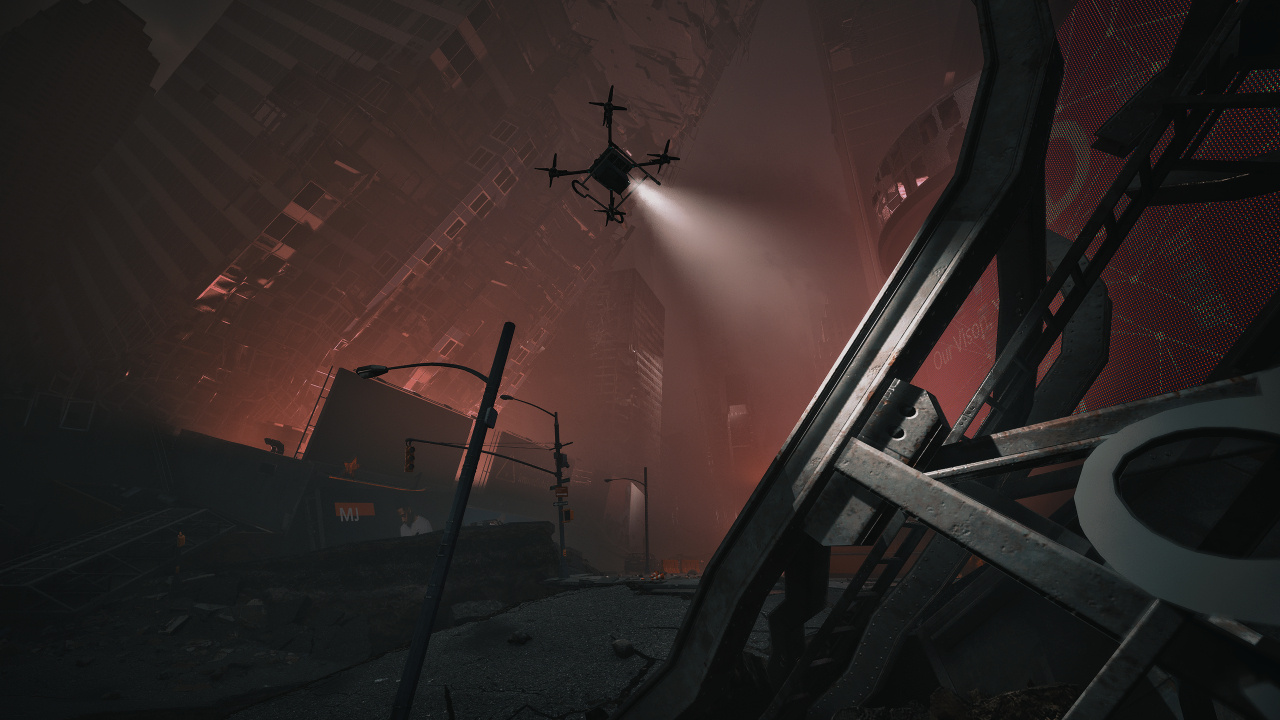
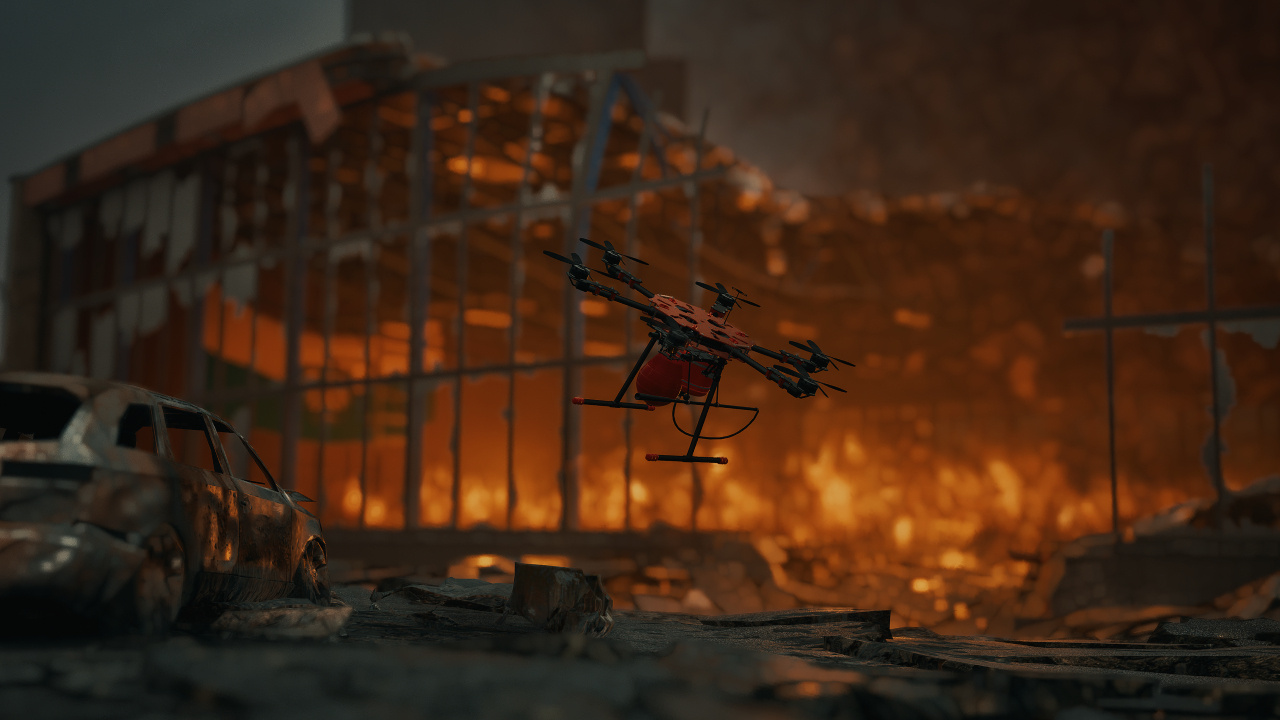
Anraga Studios and The Farm 51 have announced Rescue Drone Simulator: Second Chance, a narrative driven action and rescue simulator set in the near future, where drones have become essential tools for emergency operations. The campaign puts players in the role of a specialized operator responsible for responding to fires, explosions, natural disasters, infrastructure failures, missing persons and extreme weather events, while assessing risks and making decisions under pressure.
Drone physics will play a central role in the experience, with mass, inertia, propulsion, aerodynamics, battery life, damage and weather conditions directly affecting how each machine behaves. Wind can alter a drone’s trajectory during an operation, while the additional weight of equipment affects its response to commands, making preparation in the workshop an important factor in the success of each mission.
Two control systems will be available for different levels of experience. Simulation mode aims to reproduce a more realistic piloting experience, with demanding flight physics and realistic controls, while Arcade mode provides additional assistance to make it easier for newcomers to get started. The experience will also support controllers, keyboard and mouse, as well as first and third person perspectives and indicators for speed and wind.
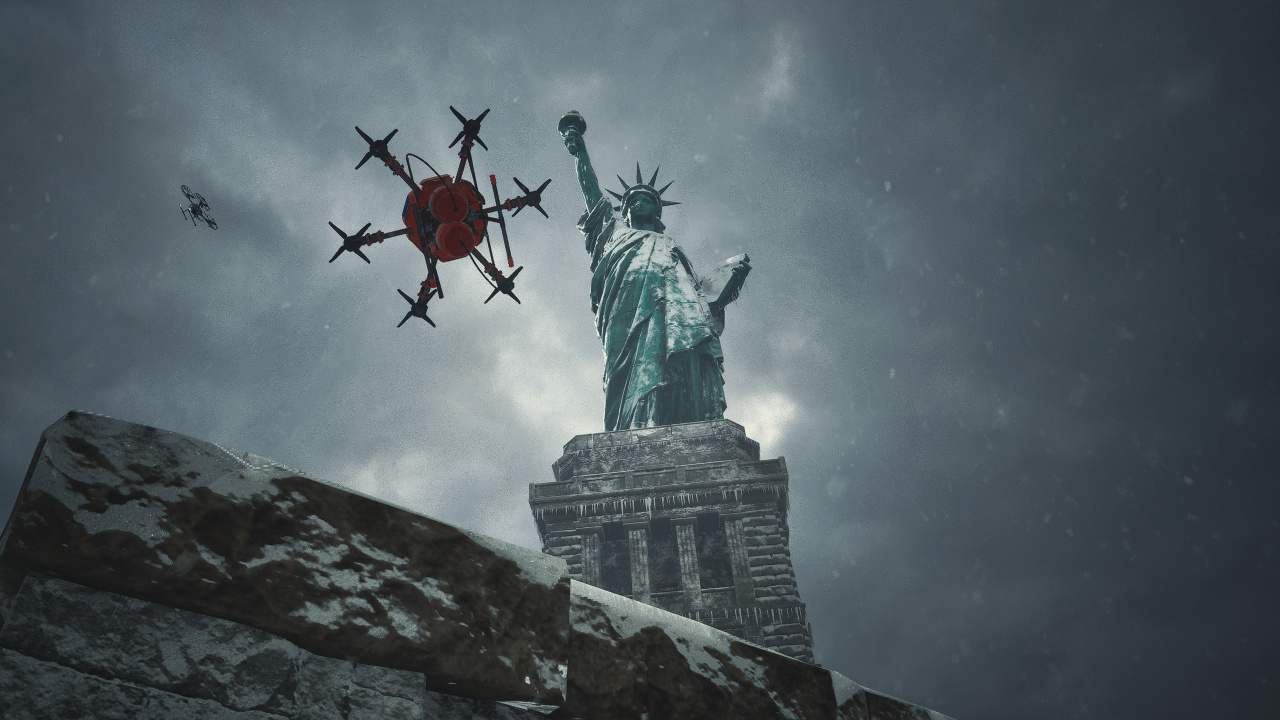
Four drone models will serve different purposes during operations, including a rescue unit capable of tracking cellphone signals, dropping medical kits and marking targets, a firefighting model equipped with a powder extinguisher and water balloons, a police drone featuring a megaphone, smoke grenades and a taser, and an interceptor designed to neutralize hostile drones using a net launcher.
Fleet customization will take place in a workshop where engines, propellers, batteries, arms, wiring and cooling systems directly affect speed, propulsion, flight time and durability. The narrative campaign will be divided into four acts, with 20 missions spread across five maps and different weather conditions, expanding the possibilities of each operation.
The second chance concept also extends to the rescue team itself, which is made up of specialists who, after accidents, illnesses, aging or traumatic experiences, are no longer able to perform their former roles in the traditional way. Technology allows these people to recover their skills and knowledge, enabling them to lead operations from a safe distance and reach places that conventional rescue teams cannot access.
The art direction is led by Wojciech Pazdur, CEO and co-founder of The Farm 51, who also serves as art director and composes the soundtrack. Known for his previous work at People Can Fly and as co-creator of Painkiller, Pazdur aims to combine contemporary drone technology with visual and musical references from the 1980s and 1990s. "Rescue Drone Simulator gives us an opportunity to put very modern drone technology in contact with the aesthetics and musical sensitivity I grew up with in the 1980s and 1990s. We don't want to create a retro game. We want to create a convincing near future with an analog soul — something more physical, industrial and human. That's why, alongside the art direction, I'm also composing the game's soundtrack myself. I want the visuals, sound and atmosphere to speak the same language," said Wojciech Pazdur, CEO of The Farm 51 and art director.
The story was written by Artur Fojcik, game director at The Farm 51, known for his work on Chernobylite and Get Even. According to the developer, the narrative aims to connect the consequences of disasters with the personal journeys of the team members. "A disaster becomes more than a spectacle when the player understands who they are trying to save and who is helping them from the other end of the radio. We want the characters' stories to emerge from what the player does during missions, rather than serving merely as breaks between them. Second Chance is the common theme among these characters: each one has lost something important and is trying to find a new role for themselves," explained Artur Fojcik, game director at The Farm 51.
Radosław Kalisz, CEO of Anraga Studios, emphasized that the project also explores the relationship between technology and work in a scenario shaped by the advancement of artificial intelligence, robotics and automation. "What matters most to us is the fantasy of being the person sent into the center of a disaster — where someone has gone missing, a fire has started or traditional rescue teams cannot reach the location safely — and knowing that the outcome of that operation depends on your decisions and skill. Second Chance also has another dimension for me personally. We are entering a world in which AI, robotics and automation will change many of the jobs that exist today. We talk a lot about the possibilities of what technology can take away from us. I am also interested in the opposite question: what can it give back to us? In our story, technology does not replace people. It allows them to use experiences and skills that, for different reasons, seemed to have been lost. We want to combine spectacular disasters and the pressure of rescue operations with the satisfaction of mastering a drone and a deeply human story. That is the foundation of Rescue Drone Simulator: Second Chance," said Radosław Kalisz, CEO of Anraga Studios.
The game is scheduled to launch in the first quarter of 2027 on PC via Steam, PlayStation 5 and Xbox Series X|S, with Anraga Studios planning a simultaneous release across all three platforms. The campaign begins with individual rescue operations before gradually expanding the scale of events, connecting climate anomalies, disasters and infrastructure failures to a larger crisis while the characters' journeys reinforce the meaning of the second chance at the heart of the project.
Related news!
Games
 Games
Games
 Indie games
 Indie games
 Indie games